

New Horizons: The Next Chapter
Europe’s deep tech enters the industrial phase – Insights from Vsquared’s New Horizons: Next Chapter deep tech ecosystem event


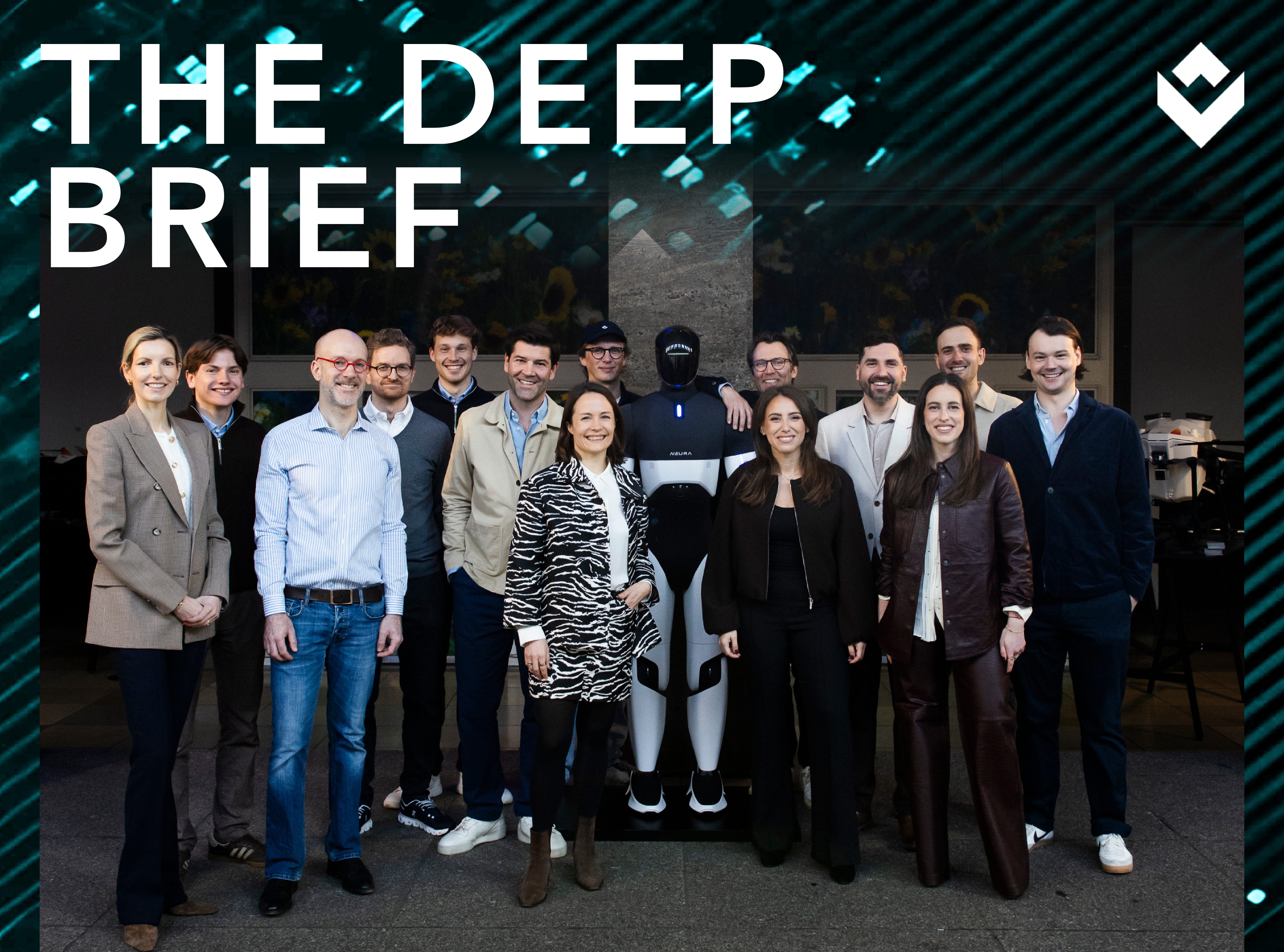
For most of the last decade, the deep tech conversation was dominated by a single question: Can you actually make this work?
Can you build a quantum computer that surpasses classical performance? Can you fly an electric aircraft commercially? Can you put a graphene electrode in a human brain?
Across nearly every case discussed at Vsquared’s New Horizons event two weeks ago, the answer is now increasingly yes. In each of these cases, founding teams cracked the code and turned frontier science into a product for sale.
That should be cause for celebration. Yet the mood in the room was more purposeful than triumphant. Because the moment proof of concept becomes proof of delivery, the nature of the challenge changes.
Entrepreneurship is always a sequence of problems: solving one simply exposes the next. And across deep tech, the question is shifting — from whether something is possible to whether it can be built at scale, at cost, and with the reliability industry requires.
That second question turns out to be even harder.
This is the defining challenge of European deep tech in 2026: not invention, but industrialisation. And industrialisation, in the end, is the path to revenue.
The pattern across every panel
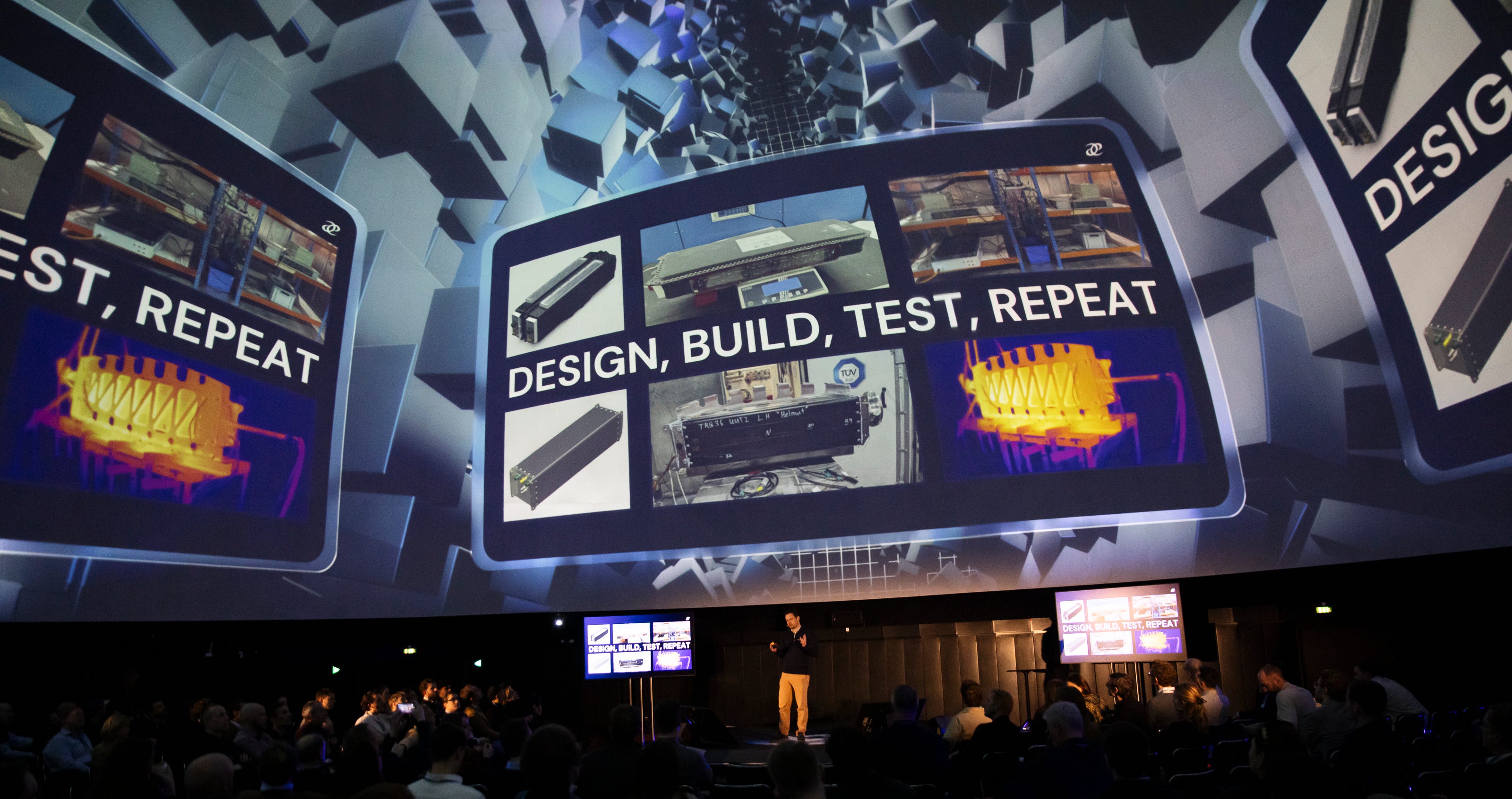
Every two years we bring together the deep tech ecosystem: our founders, our investors, industrials, policy shapers, and other VCs investing in deep tech at our New Horizons event. This year’s edition took place just now and spanned a wide range of domains: AI infrastructure, energy transition, electric aviation, brain-computer interfaces, new space, and quantum computing. The technologies discussed across panels, keynotes, and fireside chats could hardly have been more different. Yet the same structural pattern emerged in every conversation.
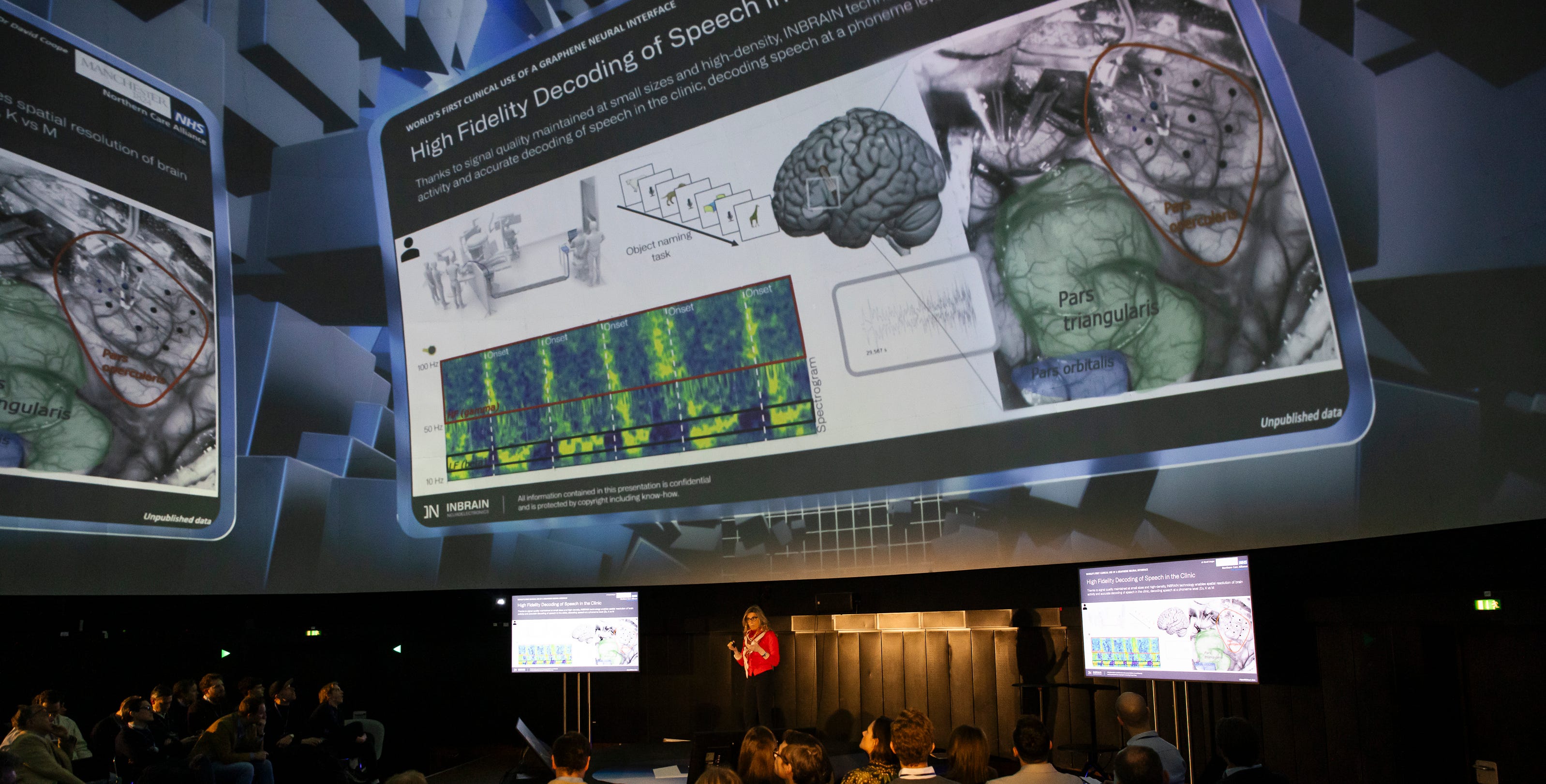
Each company has crossed a technical threshold. Isar Aerospace launched a rocket from European soil. INBRAIN Neuroelectronics implanted the world’s first graphene brain–computer interface in a human patient. constellr has satellites in orbit delivering thermal intelligence to defence customers. VÆRIDION signed its first commercial partnerships. And IQM has sold more quantum computers than any other quantum computing company in the world.
As a result, the discussions on stage were no longer primarily about the science. Instead, they focused on supply chains, manufacturing, and ecosystems: customers willing to commit early, and institutions willing to take risks alongside founders.
Ten years ago, deep tech was largely defined by breakthroughs in the lab. Today, the challenge is building the infrastructure, processes, and networks that turn those breakthroughs into scalable, real-world impact.
The frontier has moved. The lab is behind these companies. The factory, and the revenue it must generate, is what lies ahead.
What industrialisation actually requires
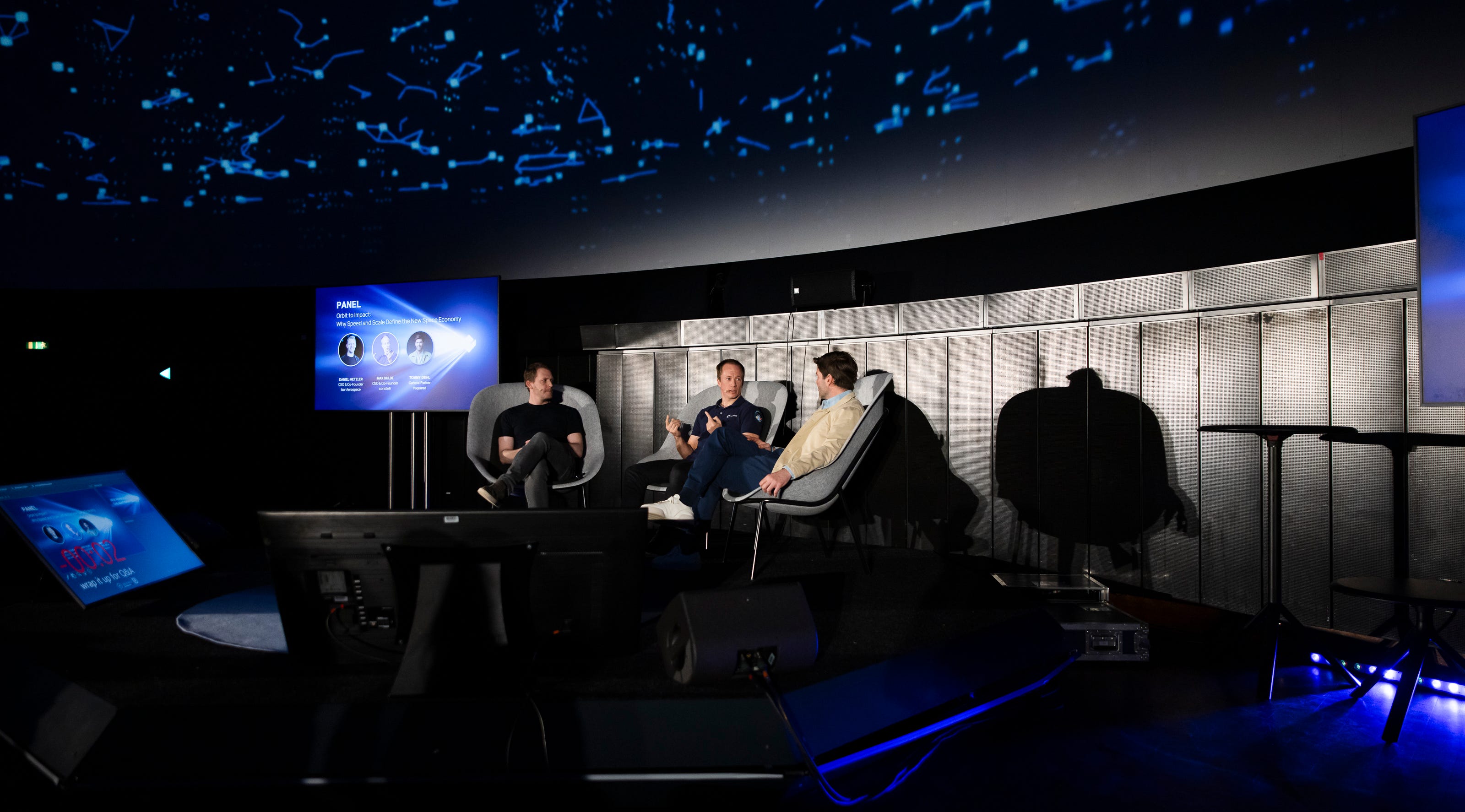
During a panel with Isar Aerospace’s Co-Founder Daniel Metzler and constellr’s Co-Founder Max Gulde, a major part of the discussion focused on industrialisation. As Daniel put it, his team’s goal is no longer just building the most elegant rocket. It is designing for manufacturing at scale from day one, treating the production line as part of the product!
Case in point: Isar’s Spectrum rocket currently has 100,000 components, but the second flight’s target has been reduced to 70,000. Every reduction, however painful, improves cost, reliability, and speed. Those gains, in turn, determine whether the unit economics work. In this case, the emphasis on industrialisation means Isar will soon be equipped to produce 40 rockets a year.
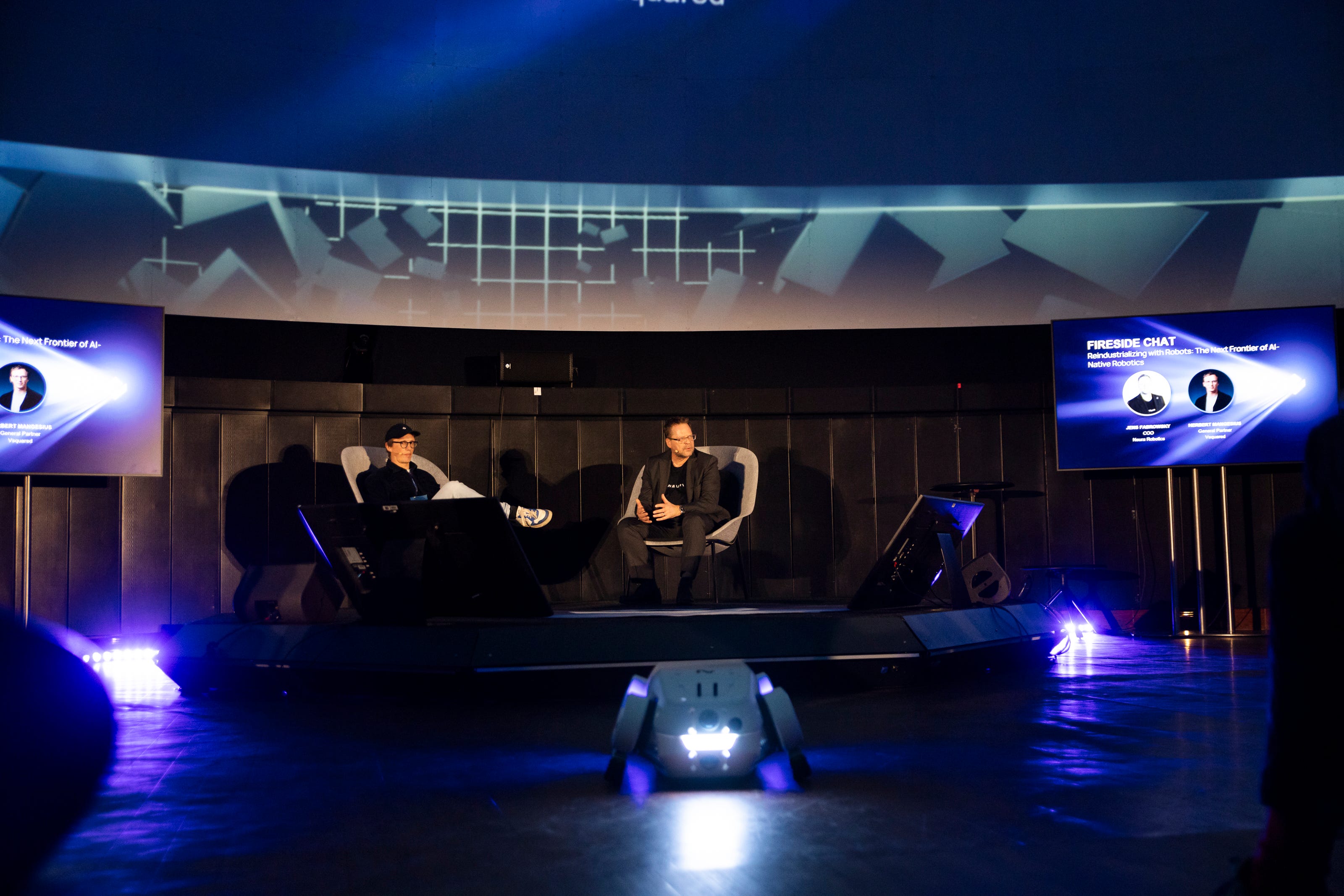
Jens Fabrowsky, COO of Neura Robotics and a 23-year Bosch veteran, described the same point from another angle. Neura’s founder David Reger coined the term “cognitive robotics” and built the core technology. Becoming an industrial company required operational discipline developed through decades of manufacturing experience. David’s vision got the product built. The company’s growth, discipline, and the teams experience, is what will make it a profitable business.
The formula repeats across our portfolio. Science creates the possibility. Engineering proves it. But manufacturing is what determines whether it reaches the world and whether it generates the returns that justify the investment.
The ecosystem is the product
For growth companies, especially in deep tech, the ecosystem is not merely supporting infrastructure. Often, it is the business model
Neura Robotics illustrates this well. Rather than selling directly into the Japanese industrial market, Neura partnered with Kawasaki, the world’s third-largest robot manufacturer. Kawasaki sells Neura’s technology as a white-label product under its own brand.
Neura provides the cognitive robotics platform and gains access to Kawasaki’s established distribution networks and decades of customer relationships across Asia. As for Kawasaki, it provides global reach, while gaining innovation velocity, future-proofed products, and access to cognitive capabilities at a fraction of the cost of independent development. Neither could achieve the same outcome alone.
There is a powerful lesson here. Post-war Japan scaled many of its industrial champions through trading houses that provided capital, logistics, and market access. Strategic partnerships today play a similar role, allowing frontier technology companies to focus on core capabilities while leveraging existing networks to scale globally.
Neura’s Neuraverse ecosystem follows the same logic in software. Rather than building every application internally, the company created a platform, part Android, part Amazon, that allows partners to develop capabilities on top of Neura’s hardware and operating system.
What one robot learns, every robot learns. The network effect is embedded in the architecture. Each new participant expands the reach and value of the platform.
Capital and institutions as infrastructure
Technology ecosystems rarely assemble themselves. They require deliberate institution-building and long-term capital deployed with strategic intent.
A clear example discussed during the event was 55 North, targeting €300 million and already the largest pure play quantum fund at first close. The set-up: it was co-anchored by Novo Holdings and Denmark’s state investment fund EIFO, and co-founded by two deep tech VCs with extensive experience in quantum and diversity in terms of location: Cambium in the US and Vsquared in Europe.
The fund’s stakeholders ambitions were and are clear: Denmark wants to do for quantum what Cambridge, UK did for artificial intelligence. Cambridge did not become a global AI hub, giving rise to landmark companies such as DeepMind and Graphcore, because its academics were simply better than everyone else’s. It succeeded because computing infrastructure was made available to both researchers and entrepreneurs at the right moment. That availability lowered the barrier to company formation and created the density of talent, capital, and ambition that compounds over time, and creates outsized returns.
Novo Holdings, the investment arm of the Novo Nordisk Foundation, one of the largest philanthropic foundations in the world, has set out to emulate that model. As an anchor investor in 55 North and a participant in early quantum infrastructure deployment, Novo Holdings is shaping the ecosystem itself, pulling forward the point at which quantum computing becomes a commercially viable market.
The same logic applies in space and defence. Germany’s €35 billion allocation to space-related defence investment represents a generational opportunity.
But as Daniel of Isar Aerospace and Max of constellr both noted, the risk is not that funding fails to materialise. The risk is that it gets absorbed by procurement bureaucracy before it reaches the companies that can actually deploy it. For founders, delayed revenue is lost revenue. Ecosystems must evolve quickly enough to absorb and deploy the capital that is coming. Stakeholders, including government, need to trust founders and the investors who back them.
The role of a VC firm at this stage
Early-stage investors back companies before the industrial challenge is solved: before factories exist and ecosystems are in place. But supporting a company through that transition requires more than capital. What does it actually mean in practice?
What we have learned over nearly a decade is that the most consequential moments often happen at moments that don’t directly relate to investment decisions, between the financing rounds.
A robotics company gets introduced to a Japanese industrial partner.
A quantum company secures its first institutional customer.
A satellite startup enters a defence programme.
A quantum fund gains backing from one of Europe’s largest foundations.
These are the connections that move companies from proven technology to real revenue — and from revenue to lasting returns, that make the work worthwhile for everyone.
We closed the afternoon at the Deutsches Museum with one observation: the ecosystem must evolve as quickly as the founders do.
The bottleneck is not talent, capital, or technology. It is the surrounding infrastructure – partners, institutions, networks, procurement pathways – that allows a founder with a proven product to build an industrial company.
Deep tech is not just a vertical. It is a method, a mindset, and increasingly a discipline of ecosystem construction.
The science works. What remains is to build the world around it. The next chapter of European deep tech has arrived, but the book is still being written.

 | A guest post by
|
 | A guest post by
|